Moroccan nila powder (also called nila zarqa, or blue nila) is a deep-blue powder that women in the Moroccan south have used for generations as part of their skincare ritual. In this guide we explain what nila is made of, its traditional benefits, how to use it step by step, and how to recognise authentic nila from cheap dyed copies.
What Is Moroccan Nila Powder Made Of?
Authentic nila comes from the indigo plant (Indigofera species). The leaves are harvested, fermented and dried, then the blue residue is collected and ground into a fine powder. Traditionally it was sold in small blue blocks or balls in souks, and grated before use.
Real nila has no added colourants. Its blue comes entirely from the natural indigo pigment produced during fermentation. That is why the colour is slightly uneven and matte rather than bright and perfectly uniform.
Nila vs. Indigo Hair Powder
The two come from the same plant family but are prepared for different uses. Indigo hair powder is ground from dried leaves and used with henna to darken hair. Nila is the concentrated pigment, used mainly in face and body masks. You can read more on our Moroccan indigo powder benefits page.
Traditional Benefits of Nila Powder
Most of what we know about nila comes from traditional use in Morocco rather than clinical trials, so we describe it the way women who use it describe it:
• Brighter-looking skin: nila is best known as part of bridal and hammam rituals to give the skin a more even, radiant look.
• Softening: mixed with clay or yoghurt, it is used as a mask that leaves the skin feeling smooth.
• Soothing after the hammam: many women apply a light nila mask after exfoliation with a kessa glove.
• Body care: it is often added to Moroccan black soap routines for the whole body, not only the face.
Note: nila is a cosmetic product. It does not treat skin conditions. If you have a skin condition, speak to a dermatologist before using new products.
How to Use Nila Powder: Step by Step
1. Patch test first. Apply a small amount on the inside of your arm and wait 24 hours.
2. Measure a small dose. Half a teaspoon is enough for a face mask. Nila is concentrated.
3. Mix with a liquid. Rose water, plain yoghurt or a little honey work well. Aim for a smooth paste.
4. Apply on clean skin. Ideally after the hammam or a warm shower, avoiding the eye area.
5. Leave for 10–15 minutes, then rinse well with lukewarm water.
6. Moisturise. Finish with a few drops of pure argan oil.
Popular Nila Mask Recipes
• Brightening mask: ½ tsp nila + 1 tbsp yoghurt + a few drops of lemon (skip lemon if your skin is sensitive).
• Clay mask: ½ tsp nila + 1 tbsp ghassoul clay + rose water.
• Body ritual: after black soap and kessa, mix nila with rose water and apply to the body for 10 minutes.
Does Nila Stain the Skin Blue?
Authentic nila can leave a very light blue tint if left on too long or used undiluted, which rinses off with soap. A strong blue stain that will not wash out is a warning sign: it often means synthetic dye has been added.
How to Spot Fake Nila Powder
Because nila has become popular online, many powders sold as "Moroccan nila" are chalk or talc coloured with synthetic blue dye. Check these points:
• Colour: real nila is deep, slightly uneven indigo. Electric, perfectly even blue is suspicious.
• Smell: authentic nila has a light earthy, fermented smell. Fake nila smells of nothing or of perfume.
• Water test: real indigo pigment does not fully dissolve; particles settle. A powder that instantly turns water bright blue usually contains soluble dye.
• Documents: a serious supplier can provide an SDS/MSDS and certificate of analysis for each batch.
• Price: real nila takes time to produce. A price far below the market usually means it has been cut.
Who Should Avoid Nila?
Do not use nila on broken or irritated skin, and stop immediately if you feel burning or itching. Pregnant women and people with very sensitive skin should ask a doctor first. Keep it away from the eyes.
How to Store Nila Powder
Keep nila in an airtight container, away from humidity and direct sunlight. Moisture makes it clump and can affect quality. Always use a dry spoon.
Buying Nila for Your Brand or Shop
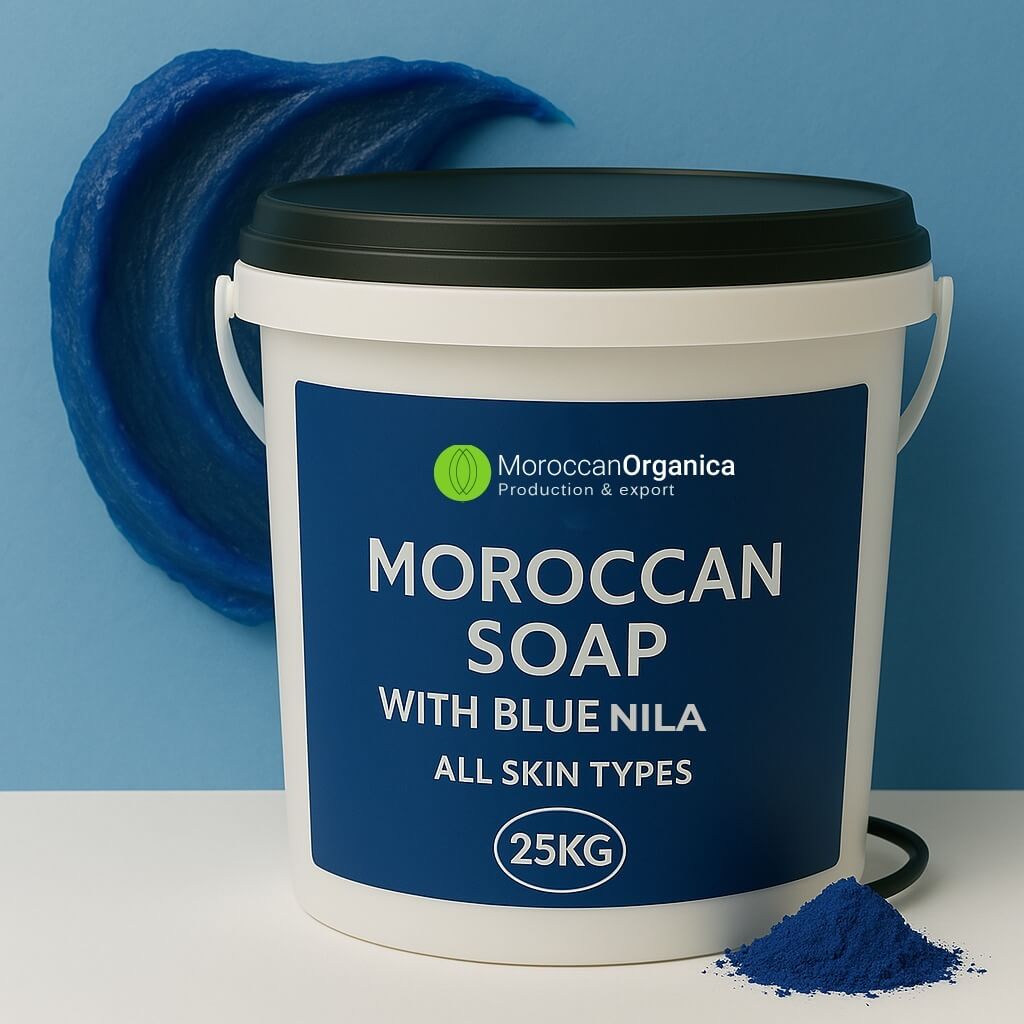
At Moroccan Organica we produce and pack nila in Morocco for beauty brands, spas and distributors, with documentation available for each batch and a minimum order starting from 50 pieces. If you are sourcing in bulk, read our nila powder wholesale guide or see the Moroccan nila powder product page.
Nila in Moroccan Tradition
In the south of Morocco, around the Sahara and the Souss, nila has long been part of family beauty knowledge passed from mother to daughter. Before weddings, brides traditionally follow several days of hammam rituals, and nila often appears alongside henna, black soap and rose water. It is also associated with the blue-dyed clothing of desert communities, which is why many people link the colour of nila with the Sahara.
Today nila is found in most Moroccan souks, from Marrakech to Agadir and Guelmim. The quality, however, varies a lot. Experienced buyers judge it by colour, smell and the way it behaves in water, the same checks we explain below.
Common Mistakes When Using Nila
• Using too much: nila is concentrated. More powder does not mean better results; it only increases the risk of a temporary blue tint.
• Leaving it on too long: 10–15 minutes is enough. Sleeping with a nila mask is not recommended.
• Skipping the patch test: even natural products can cause reactions in some people.
• Applying on dry, unprepared skin: nila works best after steam or a warm shower, when the skin is clean and soft.
• Forgetting to moisturise: clay and powder masks can leave skin feeling tight, so always finish with an oil or cream.
• Mixing with harsh ingredients: avoid combining nila with strong acids or exfoliants in the same session.
Nila Powder Quick Facts
Other names :
Nila zarqa, blue nila, Moroccan blue powder
Source :
Fermented leaves of the indigo plant (Indigofera)
Main use :
Face and body masks, hammam and bridal rituals
Typical dose :
About ½ teaspoon per face mask
Frequency :
Once or twice a week
Storage :
Airtight, dry, away from sunlight
From Our Factory: What We Check on Every Nila Batch
At our factory in Marrakech, nila is one of the products we are asked about most, often by brands that bought cheap nila elsewhere and received a powder that turned the bath bright blue. Before a batch of nila is packed, our team checks it with the same simple tests we describe in this guide: we look at the colour and texture, smell it, and do a water test to make sure the pigment settles instead of dissolving like a dye. Each batch then gets its documentation, including the safety data sheet.
We also advise our clients to give their customers clear instructions. Most complaints about nila are not about quality but about use: too much powder, too long on the skin, or no patch test. A short leaflet with the steps above solves most of these problems.
Frequently Asked Questions
What is Moroccan nila powder used for?
It is mainly used in face and body masks to give the skin a brighter, more even look, often as part of the hammam ritual.
Is nila powder natural?
Authentic nila is 100% plant-based, made from fermented indigo leaves. Some products on the market contain synthetic dye, so ask for batch documents.
How often can I use a nila mask?
Once or twice a week is the usual traditional routine. Do a patch test before the first use.
Can nila powder be used on the body?
Yes. It is commonly applied to the whole body after black soap and kessa exfoliation in the hammam.
Why does my nila turn water bright blue?
Instant, bright colouring of water is a sign of soluble synthetic dye. Real indigo pigment mostly settles at the bottom.
Ready to stock authentic nila? Contact our team for samples and a wholesale price list.