Search for "black soap" online and you will find two very different products under the same name: Moroccan black soap (savon beldi) and African black soap from West Africa. Both are traditional and natural, but they are made differently, look different and are used differently. Here is a clear comparison to help you choose, or to explain the difference to your customers.
Quick Comparison Table
Moroccan Black Soap (Beldi)
African Black Soap
Origin
Morocco
West Africa (notably Ghana and Nigeria)
Main ingredients
Olive oil and olive paste, potash
Ash from plant matter (such as plantain skins or cocoa pods), with oils like shea butter, palm kernel or coconut oil
Texture
Soft gel or paste
Solid, slightly crumbly bar
Colour
Brown to almost black
Light to dark brown, often uneven
Main use
Pre-exfoliation in the hammam, with a kessa glove
Daily cleansing of face and body, also hair
Rinse off
Left on 5–10 minutes, then rinsed
Lathered and rinsed straight away
How Moroccan Black Soap Is Made
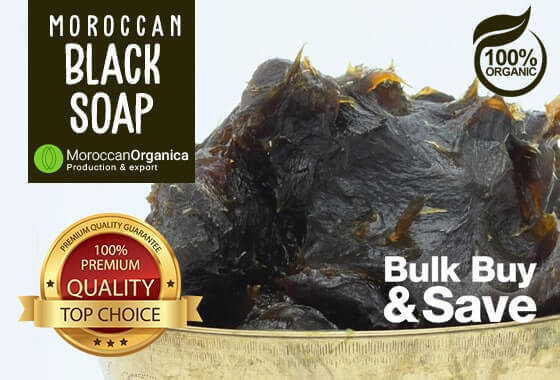
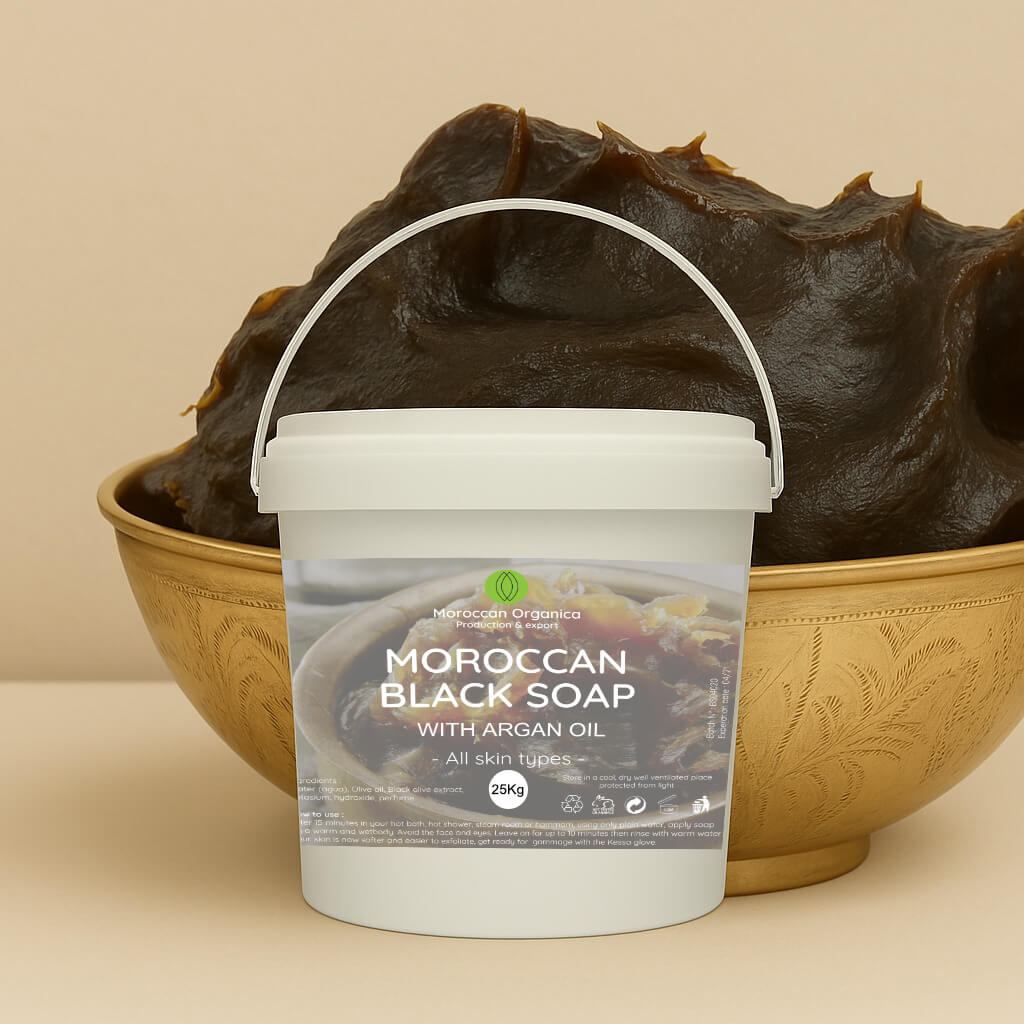
Savon beldi is made by saponifying olive oil and olive paste with potash, then cooking the mixture slowly until it turns into a smooth, dark paste. Because potassium-based soaps are soft, beldi soap never becomes a hard bar. Some producers add eucalyptus, argan oil or rose. Learn more in our complete guide to Moroccan black soap.
How African Black Soap Is Made
African black soap is made from the ash of roasted plant materials, traditionally plantain skins, cocoa pods or palm leaves, which provides the alkali. The ash is mixed with oils and butters such as shea, palm kernel or coconut oil, then stirred and left to cure. The result is a soft but solid bar with a rustic look. In Nigeria a well-known version is called dudu-osun.
Differences in Use
Moroccan Black Soap: A Ritual Product
Beldi soap is designed for the hammam ritual. You apply it on warm, damp skin, leave it to work for a few minutes, rinse, then exfoliate with a kessa glove. It is mainly a body product used once a week for deep exfoliation, though a small amount can be used as a wash.
African Black Soap: An Everyday Cleanser
African black soap is generally used like a regular soap: lathered with water and rinsed straight away. It is popular as a daily face and body wash, and is sometimes used as a shampoo.
Which One Is Right for You?
• You want a spa-style exfoliation ritual: Moroccan black soap with a kessa glove.
• You want a daily bar for face and body: African black soap is closer to what you need.
• You love olive-based products: beldi soap, since olive is its main ingredient.
• You prefer shea butter-based products: African black soap usually contains shea.
Both soaps are alkaline. Whichever you choose, follow with a moisturiser such as argan oil, and patch test if you have sensitive skin.
Common Mix-Ups to Avoid
• Calling all black soaps the same: as a retailer, name your product clearly ("Moroccan black soap – savon beldi") so customers know what to expect.
• Using beldi soap like a bar: it is a paste meant to sit on the skin before exfoliation, not to lather like regular soap.
• Scrubbing without softening: using a kessa glove without black soap and steam first is harsher and less effective.
Why the Difference Matters for Retailers
If you sell natural skincare, many customers arrive expecting one product and receive the other. Clear product names, photos of the texture and a short "how to use" card in the package reduce returns and bad reviews. For Moroccan black soap, include a kessa glove in a gift set so customers can enjoy the full ritual.
Brands interested in stocking authentic savon beldi can visit our black soap wholesale page, our specialist site moroccanblacksoap.com, or read our wholesale and private label guide.
Storage and Shelf Life Compared
Because of their different textures, the two soaps need different care. Moroccan black soap is a paste, so it must stay in a closed, airtight jar; contact with air dries it out and water from wet fingers changes its texture. African black soap is a bar that absorbs moisture easily and can become soft or mushy if left in a wet soap dish. Keep it on a draining dish and cut off only the piece you need.
For both, a cool, dry place away from direct sunlight is best. Always check the batch documentation from your supplier for the stated shelf life.
Can You Use Both?
Yes. Some people use African black soap as their daily wash and keep Moroccan black soap for a weekly hammam-style exfoliation. If you do this, make sure your skin is not over-cleansed: if it feels tight or irritated, reduce frequency and increase moisturising.
Black Soap Myths
• "Black soap is always black." Neither soap is truly black. Moroccan black soap is dark brown to almost black; African black soap is often light to medium brown.
• "All black soaps are the same product." As this guide shows, they come from different regions, ingredients and methods.
• "Natural means it can never irritate." Both are alkaline soaps, and any product can irritate sensitive skin. Patch test first.
• "More lather means better cleansing." Moroccan black soap lathers very little because it is used as a paste. That is normal.
From Our Factory: Why We Wrote This Comparison
We wrote this guide because of a real problem we see with our wholesale clients. Customers buy "black soap" online expecting a solid bar, receive a soft Moroccan paste, and think something is wrong. Others expect the hammam ritual and receive an African bar. Both products are good, but they are not the same.
At our factory in Marrakech we only produce Moroccan black soap, made from olive. When our clients put a clear name on the label ("Moroccan black soap, savon beldi"), a photo of the paste texture, and a short "how to use" card in the box, the confusion disappears. We recommend this to every retailer who adds black soap to their shop, whichever version they sell.
If you are still unsure which one to stock, order a small quantity of both and ask your customers. Their feedback after the first month will tell you more than any comparison table.
Frequently Asked Questions
Is Moroccan black soap the same as African black soap?
No. Moroccan black soap is an olive-based paste made with potash, while African black soap is a solid bar made with plant ash and oils such as shea butter.
Which black soap is better for exfoliation?
Moroccan black soap, used with a kessa glove in a steamy environment, is designed specifically for exfoliation.
Can I use Moroccan black soap on my face like African black soap?
Yes, in a small amount and for a short time (2–3 minutes), without scrubbing hard.
Why is Moroccan black soap a paste and not a bar?
It is made with potash (potassium hydroxide), which produces a soft soap, instead of a hard bar.
Which one is better for sensitive skin?
Both are alkaline. Sensitive skin should patch test either one, limit contact time and moisturise afterwards.
Want to offer the authentic Moroccan version? Ask us for samples.