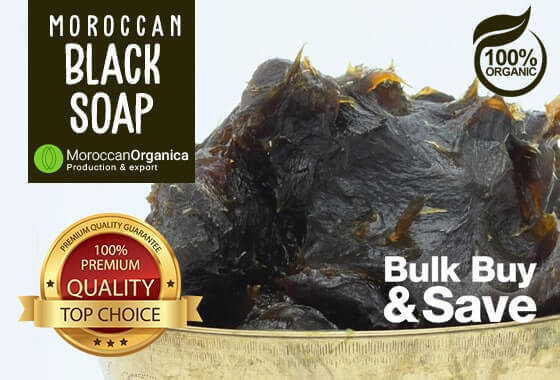
Moroccan black soap, known locally as savon beldi, is the heart of the traditional Moroccan hammam. Its soft, gel-like texture and deep cleansing action have made it a favourite far beyond Morocco. In this guide you will learn what beldi soap is made of, its benefits, and exactly how to use it, in a hammam or at home.
What Is Moroccan Black Soap Made Of?
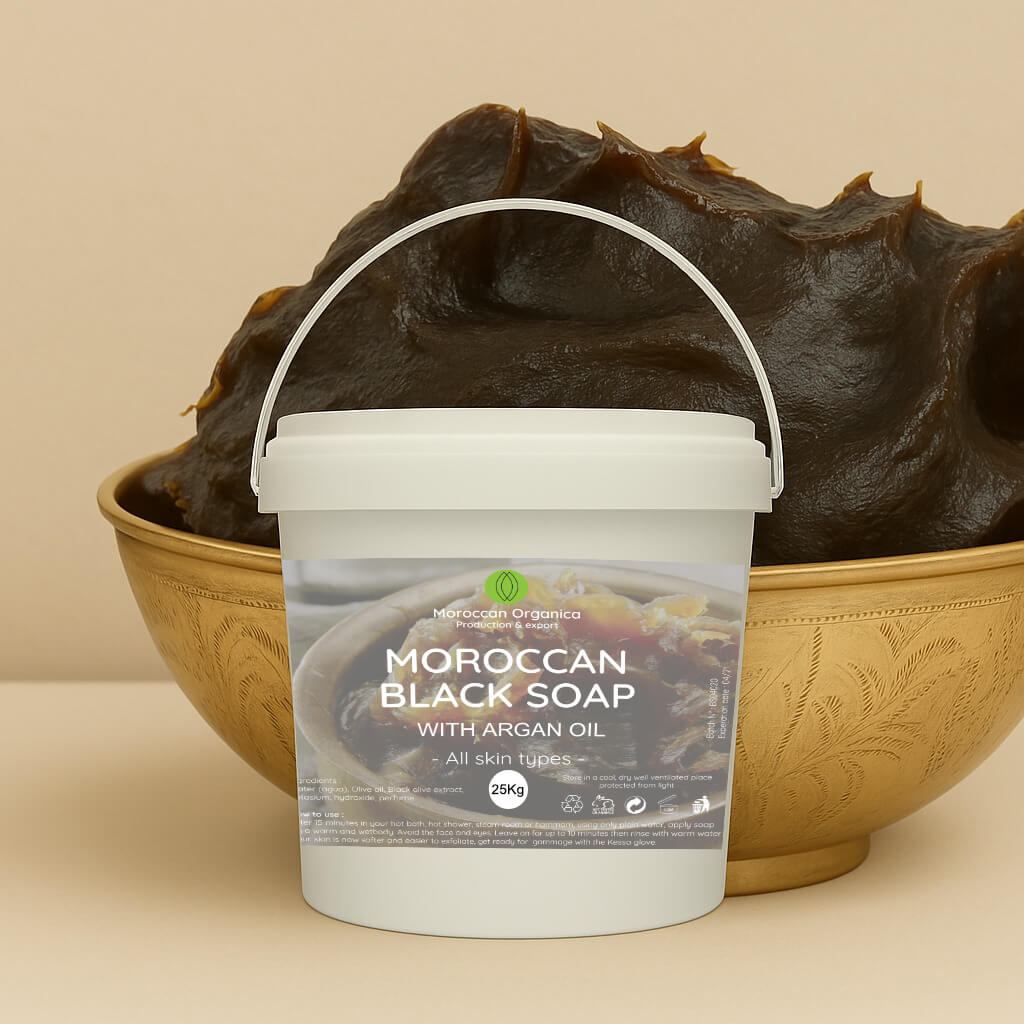
Savon beldi is made from olive oil and olive paste, traditionally from black olives, saponified with potash (potassium hydroxide). The mixture is slowly cooked until it becomes a dark, soft paste. That is why beldi soap looks like a brown-black gel rather than a solid bar.
Many versions add natural ingredients such as eucalyptus essential oil for a fresh scent, or argan oil, rose and ghassoul clay. Pure savon beldi, however, needs nothing more than olive and potash.
Benefits of Moroccan Black Soap
• Deep cleansing: the olive-based paste lifts impurities and prepares the skin for exfoliation.
• Prepares for exfoliation: applied on warm, damp skin, it softens the top layer so the kessa glove can remove dead skin more easily.
• Smoother-feeling skin: after the ritual, skin feels soft and renewed.
• Rich in olive: olive oil is a traditional ingredient in Mediterranean skincare and gives the soap its gentle, nourishing feel.
• Simple ingredient list: traditional beldi soap has very few ingredients, which appeals to people looking for natural products.
Savon beldi is alkaline, like all true soaps. People with very dry or sensitive skin should limit contact time and always moisturise afterwards.
How to Use Moroccan Black Soap: The Hammam Ritual
1. Warm up. Spend 5–10 minutes in the steam of the hammam or a hot shower to open the pores.
2. Apply the soap. Take a small amount (about a tablespoon for the body) and spread it on damp skin. Avoid the eyes.
3. Wait. Leave it for 5–10 minutes while staying in the warmth.
4. Rinse. Rinse the soap off completely with warm water.
5. Exfoliate with the kessa. With a kessa glove, scrub in firm, long movements. You will see the dead skin rolling off.
6. Mask (optional). Apply a ghassoul clay or nila mask for 10 minutes, then rinse.
7. Moisturise. Finish with argan oil or rose water on clean skin.
Using Beldi Soap at Home Without a Hammam
You can recreate the ritual in your bathroom. Run a hot shower for a few minutes to fill the room with steam, keep the door closed, and follow the same steps. A hot bath of 10 minutes also works well before applying the soap.
How Often Should You Use It?
For the full ritual with kessa, once a week is enough for most people. Daily scrubbing can irritate the skin. On other days you can use a little beldi soap as a gentle wash without exfoliation.
Can You Use Moroccan Black Soap on the Face?
Yes, many people do, but use a very small amount, leave it for 2–3 minutes only, and do not scrub the face with the kessa as hard as the body. If your facial skin is sensitive, test on a small area first.
How to Choose a Good Savon Beldi
• Texture: it should be a smooth, soft paste, not liquid and not hard.
• Colour: natural shades range from brown to almost black depending on the olives used.
• Smell: olive and earthy notes, or eucalyptus if added. A heavy perfume smell can hide low-quality ingredients.
• Ingredient list: look for olive oil, olive paste and potassium hydroxide (potash) near the top.
• Packaging: a sealed, airtight jar keeps it fresh and prevents it from drying out.
Not sure how beldi soap compares with the African version? Read our comparison: Moroccan beldi soap vs African black soap.
Storing Black Soap
Close the jar tightly after each use and keep it away from water and heat. Use a dry spoon or spatula rather than wet fingers to keep the soap clean.
For Brands and Spas
If you want to sell savon beldi or use it in your spa, see our Moroccan black soap wholesale page or our dedicated site moroccanblacksoap.com. We also wrote a full black soap wholesale and private label guide.
The Hammam Tradition Behind Savon Beldi
For centuries, the public hammam has been a weekly ritual in Moroccan cities and villages, a place to cleanse the body, relax and meet family and neighbours. Savon beldi is the first step of that ritual. Its name comes from the word beldi, meaning traditional or local, to distinguish it from industrial soaps.
In a traditional hammam, women and men move from the warm room to the hot room, apply black soap, wait for it to work, then use the kessa, often with help from an attendant called a tayaba or kessal. Many families still keep a jar of black soap, a kessa and a bowl in their hammam bag, ready for the weekly visit.
Common Mistakes With Moroccan Black Soap
• Using it on dry skin: black soap needs warm, damp skin to work properly.
• Not waiting long enough: rinsing after one minute does not give the soap time to soften the skin.
• Scrubbing too hard: firm pressure is fine, but redness or pain means you are scrubbing too much.
• Exfoliating too often: once a week is enough; more can irritate the skin.
• Skipping moisturiser: freshly exfoliated skin needs oil or cream to stay comfortable.
• Using a wet jar: water inside the jar changes the texture and shortens the soap's life.
What You Need for a Home Hammam Ritual
• Moroccan black soap (savon beldi)
• A kessa exfoliating glove
• Ghassoul clay or nila powder for an optional mask
• Argan oil or rose water to finish
• A warm, steamy bathroom and about 45 minutes
From Our Factory: How We Prepare Savon Beldi
For us, black soap is not just a product; it is something every member of our team grew up with in the hammam. At our factory in Marrakech we prepare savon beldi from olive oil and olive paste, then check every batch for texture, colour and smell before filling. A good black soap should be smooth and soft, never watery or grainy.
The most common question we receive from customers is "why doesn't it lather?". The answer is that savon beldi is not meant to foam like a shower gel. It is a paste that sits on warm skin and prepares it for the kessa. When people use it this way, in steam and followed by exfoliation, they understand why Moroccan families have used it for generations.
Frequently Asked Questions
What is Moroccan black soap made of?
Traditional savon beldi is made from olive oil and olive paste saponified with potash, cooked into a soft dark paste.
How long should I leave black soap on my skin?
About 5–10 minutes on the body, in a warm, steamy environment, before rinsing and exfoliating.
Do I need a kessa glove?
The kessa is what removes the dead skin after the soap softens it. Without it you still get a cleansing wash, but not the full exfoliation.
Can I use Moroccan black soap every day?
As a gentle wash, yes. The full scrub with the kessa is best kept to once a week.
Is beldi soap good for sensitive skin?
It is alkaline, so sensitive skin should use less, shorten the contact time, patch test first and moisturise after.
Bring the hammam ritual to your customers. Contact us for samples of authentic savon beldi.