Moroccan ghassoul clay, also spelled rhassoul or ghasoul, is a natural mineral clay that Moroccans have used for centuries to wash the skin and hair. It is one of the essential products of the hammam, next to black soap and the kessa glove. In this guide we explain where ghassoul comes from, why it is different from other clays, and how to use it for your face, body and hair.
What Is Ghassoul Clay?
Ghassoul is a clay extracted from deposits in the Middle Atlas mountains of Morocco, in the Moulouya valley. Morocco is known as the main source of this clay worldwide. Its name comes from the Arabic word for "to wash", which tells you how it has traditionally been used: as a natural cleanser for skin and hair.
The clay is mined, washed, dried in the sun and ground. In traditional preparation, families soak raw ghassoul pieces with herbs such as orange blossom, chamomile or lavender, then dry them again before use. Modern ghassoul is usually sold as a fine, light brown powder.
Why Ghassoul Is Different from Other Clays
Ghassoul is a mineral-rich clay, notably rich in magnesium and silica. When mixed with water it becomes silky and slippery, and it can cleanse without lathering. This makes it gentler than many soaps and a popular choice for "no-poo" hair routines and sensitive skin.
Benefits of Ghassoul Clay
• Gentle cleansing: ghassoul absorbs excess oil and impurities without foaming agents.
• Purifying for oily skin: as a mask, it helps skin feel clean and matte.
• Softer-feeling skin: after rinsing, the skin feels smooth rather than tight, especially when followed by an oil.
• Natural hair wash: it cleanses the scalp and hair and is valued for leaving hair soft and full.
• Part of the hammam ritual: it is traditionally applied after black soap and kessa exfoliation.
Note: ghassoul is a cosmetic product and does not treat skin or scalp conditions. Ask a dermatologist if you have a specific condition.
How to Prepare Ghassoul
1. Put 1–2 tablespoons of ghassoul powder in a non-metal bowl.
2. Add water or rose water little by little, stirring with a wooden or plastic spoon.
3. Stop when you get a smooth paste, similar to yoghurt.
4. Let it rest for 2–3 minutes so the clay hydrates fully.
How to Use Ghassoul as a Face Mask
1. Cleanse your face and, ideally, open the pores with a warm towel or steam.
2. Apply a thin, even layer, avoiding the eyes and lips.
3. Leave for 5–10 minutes. Do not let it dry and crack completely; mist with rose water if needed.
4. Rinse with lukewarm water and pat dry.
5. Finish with a few drops of argan oil or a light moisturiser.
Use once or twice a week. Dry skin types should use it less often and shorten the time.
How to Use Ghassoul for Hair
1. Prepare a slightly more liquid paste: about 3 tablespoons of ghassoul with warm water.
2. Wet your hair and apply the paste to the scalp and lengths, massaging gently.
3. Leave for 5–10 minutes.
4. Rinse very well with warm water until no clay remains.
5. Optional: finish with a light conditioner or a few drops of argan oil on the ends. See our guide to argan oil for hair.
Ghassoul in the Full Hammam Ritual
In a Moroccan hammam, ghassoul is the third step. First comes steam and black soap, then exfoliation with the kessa glove, then a ghassoul mask on the body and hair. The ritual ends with rose water and argan oil. You can recreate it at home in a steamy bathroom.
Popular Ghassoul Recipes
• Purifying mask: 1 tbsp ghassoul + rose water.
• Nourishing mask: 1 tbsp ghassoul + 1 tsp honey + rose water.
• Blue ritual mask: 1 tbsp ghassoul + ½ tsp nila powder + rose water.
• Hair wash: 3 tbsp ghassoul + warm water + 3 drops argan oil.
Common Mistakes With Ghassoul
• Using a metal bowl or spoon: traditionally avoided; wood, glass or plastic are preferred.
• Letting the mask dry out completely: this can leave skin feeling tight.
• Not rinsing hair enough: leftover clay can make hair feel dull.
• Using it every day: once or twice a week is enough for most people.
• Skipping moisturiser: clay absorbs oil, so finish with argan oil or cream.
How to Choose Quality Ghassoul
• Origin: genuine ghassoul comes from Morocco's Atlas region.
• Texture: a fine, soft powder without sand or grit.
• Colour: natural light to medium brown, sometimes greyish.
• Purity: 100% clay unless herbs are clearly listed.
• Documents: serious suppliers provide SDS/MSDS and batch information.
Storage
Keep ghassoul powder in a closed container in a dry place. Prepared paste should be used right away; do not store it wet.
Ghassoul for Brands and Spas
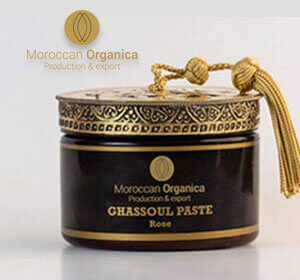
Moroccan Organica supplies ghassoul clay in bulk and private label, from a minimum order of 50 pieces, with ECOCERT, ISO and USDA certifications and SDS/MSDS documentation. See our ghassoul clay wholesale page.
Ghassoul by Skin and Hair Type
Type
How to use ghassoul
Oily skin
Mask with rose water, up to twice a week, 10 minutes.
Combination skin
Apply mainly on the T-zone (forehead, nose, chin), once or twice a week.
Dry skin
Add honey or a few drops of argan oil to the paste; 5 minutes, once a week.
Sensitive skin
Patch test first, use a thin layer, rinse after 5 minutes.
Oily scalp
Use as a hair wash once or twice a week.
Dry or curly hair
Apply mainly on the scalp, add argan oil, and condition the lengths afterwards.
Ghassoul in Moroccan Tradition
Ghassoul has been part of Moroccan beauty for generations. It is traditionally included in a bride's trousseau and in the hammam bag that families take to the public bathhouse each week. Many Moroccan women prepare their own perfumed ghassoul at home, soaking the clay with a mix of herbs and flowers, a recipe passed from mother to daughter. This heritage is one reason ghassoul has become popular in spas around the world as part of "Moroccan ritual" treatments.
For brands, this story is valuable: customers who discover ghassoul are often looking for authentic, simple and natural products with a real cultural background.
From Our Factory: How We Handle Ghassoul
Our ghassoul comes from the Middle Atlas, its region of origin. When it arrives at our factory in Marrakech, we check that the powder is fine and free from sand or grit, because a gritty clay is unpleasant on the face and hard to rinse from hair. Every batch is then documented before packing.
The advice we give most often is simple: do not let the mask dry completely, and always rinse very well. Many first-time users leave ghassoul on too long and find their skin tight, or do not rinse enough and find their hair dull. Used for a few minutes and followed by a little argan oil, it gives the soft, clean feeling that has made it a Moroccan favourite.
Frequently Asked Questions
What is ghassoul clay used for?
It is used as a natural cleanser and mask for the skin and hair, especially in the Moroccan hammam ritual.
Is ghassoul the same as rhassoul?
Yes. Ghassoul, rhassoul and ghasoul are different spellings of the same Moroccan clay.
Can I use ghassoul instead of shampoo?
Many people use it as a natural hair wash once or twice a week. Rinse very well afterwards.
How long should I leave a ghassoul mask on?
About 5–10 minutes, without letting it dry and crack completely.
Is ghassoul good for dry skin?
It can be used on dry skin, but less often, for a shorter time, and always followed by an oil or moisturiser.
Looking for authentic Moroccan ghassoul? Contact us for samples and a wholesale price list.